
Ecommerce Fulfillment and 3PL for Indonesian Sellers
Top 3PL providers for Indonesian ecommerce sellers. Pick-and-pack costs in IDR, warehouse options, courier integrations, and when to outsource fulfillment.
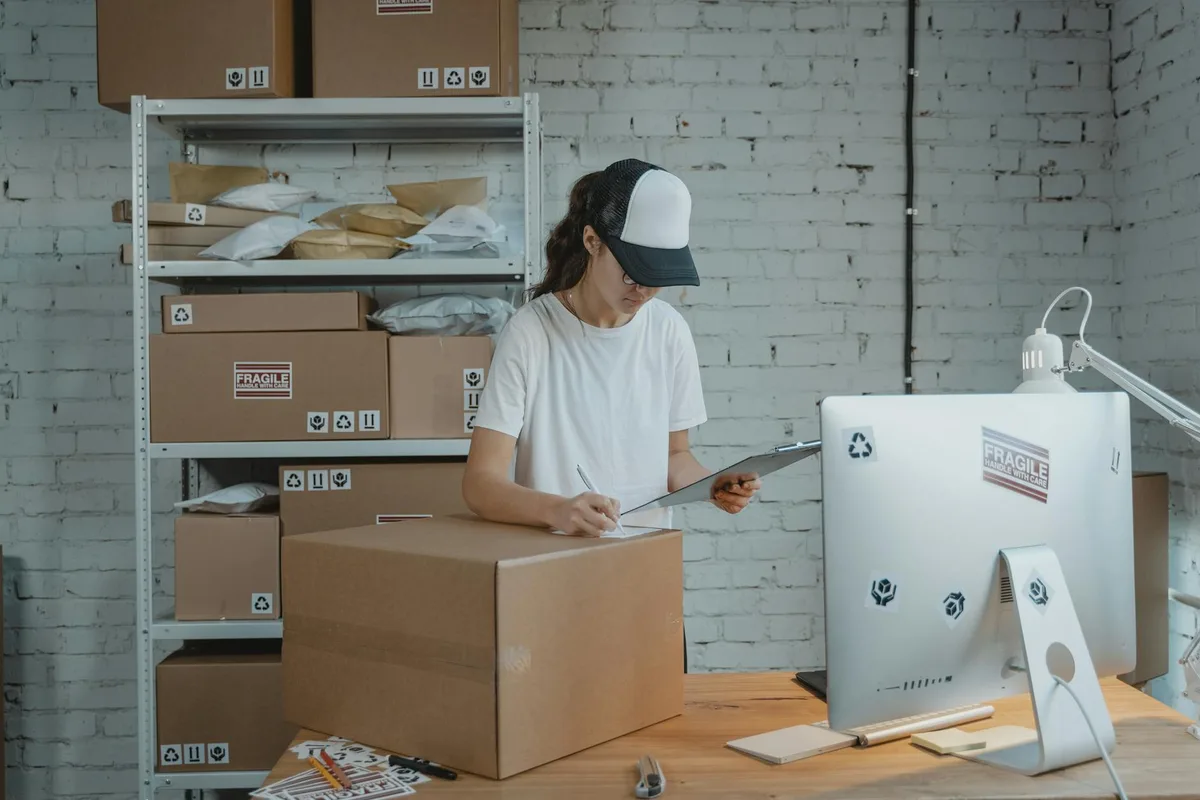
Your orders are piling up. The warehouse is full.
That is the inflection point every growing Indonesian ecommerce seller hits — and it forces a choice: expand your own space, hire more staff, or hand fulfillment to a 3PL.
Ecommerce fulfillment via 3PL has become the default infrastructure for sellers scaling past 30–50 daily orders in Indonesia. From Boxme’s multi-city warehouse network to marketplace-native programs like Fulfilled by Shopee (FBS), the options are no longer limited to expensive enterprise contracts. But choosing wrong means paying for speed you do not need, or locking your orders into a partner who cannot handle your peak campaign volume.
This guide covers how 3PL fulfillment works in Indonesia, which providers operate here, what it costs in IDR, and how to evaluate whether outsourcing is the right move for your operation.
What Is Ecommerce Fulfillment 3PL?
Ecommerce fulfillment 3PL (third-party logistics) is a warehousing and order fulfillment service where an external provider handles storage, picking, packing, and courier handoff on behalf of an ecommerce seller. In Indonesia, established 3PLs typically charge Rp 3,000–8,000 per order for pick-and-pack operations, according to benchmarks from the Komunitas Seller Indonesia logistics discussion groups.
In a 3PL arrangement, you send your inventory to the provider’s warehouse. When an order arrives — from Shopee, Lazada, Tokopedia, or any other channel — the 3PL picks the product, packs it, labels it, and hands it off to a courier. You never touch the parcel.
This contrasts with two other models:
- Self-fulfillment: You warehouse and ship from your own space, using your own staff.
- Dropshipping: The supplier ships directly to the customer — you hold no inventory.
3PL sits between these extremes. You own the inventory; the 3PL provides the labor, equipment, and warehouse space.
For Indonesian sellers, 3PL becomes practical when order volume, channel count, or SKU complexity makes self-fulfillment unsustainable. A seller running 200 daily orders across four marketplaces from a Jakarta ruko (shophouse) faces a clear choice: hire warehouse staff and expand space, or outsource the entire operation.
Why Are Indonesian Sellers Moving to 3PL?
Indonesian sellers switch to 3PL for three reasons: rising warehouse costs in Jakarta and surrounding cities, campaign spikes that overwhelm self-fulfillment capacity, and marketplace SLA programs (FBS, FBT) that offer ranking advantages only enrolled sellers can access. All three pressures are accelerating as Indonesia’s ecommerce market grows.
Three pressures are driving the shift.
Warehouse costs in major cities are rising. Based on industrial property listings in greater Jakarta — Bekasi, Tangerang, Depok — warehouse rental rates have increased as ecommerce demand absorbs available space. Sellers who locked in affordable ruko space several years ago now face renewal pricing that changes the economics of self-fulfillment.
Campaign peaks create capacity mismatches. Shopee 11.11, Lazada Birthday Sale, and Ramadan sale periods push daily order volumes sharply above normal levels — Indonesian marketplace seller communities frequently report 5–10x spikes during peak campaign days. Self-fulfillment warehouses staffed for 80 daily orders cannot absorb 600 orders on a single day without delays, picking errors, and SLA violations that damage seller ratings.
Marketplace SLA requirements are tightening. Shopee’s Fulfilled by Shopee (FBS) program and Tokopedia’s Fulfillment by Tokopedia (FBT) both offer featured placement and reduced late-shipment risk for enrolled sellers. Self-fulfilling sellers cannot match those SLA advantages unless they operate with professional pick-and-pack speed and discipline.
The Indonesian Ministry of Trade (Kementerian Perdagangan) has identified third-party logistics capacity as a key enabler of digital commerce growth across the archipelago, particularly for reaching buyers outside Java.
Which 3PL Providers Operate in Indonesia?
Seven major 3PL options serve Indonesian ecommerce sellers: Fulfilled by Shopee (FBS), Fulfillment by Tokopedia (FBT), Boxme Indonesia, and courier-owned fulfillment from JNE, J&T Express, SiCepat, and Ninja Van. Independent 3PLs like Boxme support all major marketplaces from a single warehouse; marketplace-native programs offer SLA advantages on their own platforms only.
Indonesia has a range of 3PL options, from marketplace-native programs to independent fulfillment centers with multi-channel routing.
| Provider | Type | Coverage | Marketplace Integration | Pricing Basis |
|---|---|---|---|---|
| Fulfilled by Shopee (FBS) | Marketplace-native | 20+ cities | Shopee only | Commission-based |
| Fulfillment by Tokopedia (FBT) | Marketplace-native | Jakarta + 15 cities | Tokopedia only | Commission-based |
| Boxme Indonesia | Independent 3PL | Jakarta, Surabaya, Bandung | Shopee, Lazada, Tokopedia, TikTok Shop | Custom quote |
| JNE Logistics | Courier-owned 3PL | Nationwide | Shopee, Lazada | Per-order + storage |
| J&T Express Fulfillment | Courier-owned 3PL | Nationwide | Shopee, Lazada, Tokopedia | Per-order + storage |
| SiCepat REX | Courier-owned 3PL | Java + Bali | Shopee, Lazada | Per-order + storage |
| Ninja Van Fulfillment | Regional 3PL | Jakarta, Surabaya | Shopee, Lazada | Custom quote |
Pricing and coverage are based on publicly available provider information and seller community discussions as of 2026. Request direct quotes for your specific volume and SKU mix.
Marketplace-native programs (FBS, FBT) offer the strongest SLA advantages and campaign visibility for sellers concentrated on a single platform. The trade-off: you cannot route orders from other marketplaces through the same facility.
Independent 3PLs like Boxme handle orders from every channel through a single warehouse, but require a separate vendor relationship and API integration.
Courier-owned 3PLs from JNE, J&T, and SiCepat bundle storage with their existing delivery infrastructure. They tend to carry lower base costs for simple, standard SKUs but may lack the WMS sophistication needed for complex inventory — variants, bundles, serial numbers.
For a detailed framework on evaluating and comparing 3PL providers across Southeast Asia, see our 3PL logistics evaluation guide.
What Does 3PL Fulfillment Cost in Indonesia?
3PL fulfillment cost in Indonesia has three components: storage (Rp 5,000–30,000 per unit per month by item size), pick-and-pack labor (Rp 3,000–10,000 per order depending on provider tier), and courier delivery (Rp 15,000–25,000 for Java, higher for outer islands). A standard small-parcel order runs Rp 29,000–45,000 all-in.
3PL cost has three components: storage, fulfillment labor, and shipping.
Storage is typically charged per unit per month or per cubic meter per day (rates from Indonesian logistics community benchmarks and publicly available 3PL pricing as of 2026):
- Rp 5,000–10,000 per unit per month for small items (fitting a 20×20×20 cm box)
- Rp 15,000–30,000 per unit per month for large items requiring dedicated pallet space
Fulfillment labor covers pick, pack, and label for a single-item order:
- Rp 3,000–5,000 at courier-owned 3PLs (JNE, J&T, SiCepat)
- Rp 6,000–10,000 at independent 3PLs with multi-channel routing and SLA guarantees
- Higher rates apply for kitting orders, fragile handling, or custom branded inserts
Shipping follows standard courier rates. Via JNE Reguler or J&T Express, domestic delivery from Jakarta to other Java cities typically runs Rp 15,000–25,000 per kg. Outer island destinations — Kalimantan, Sulawesi, Papua — add significantly to this base rate.
A practical estimate for a standard single-item order (200g, poly bag, Jakarta to Java):
- Storage allocation: ~Rp 6,000
- Pick-and-pack: ~Rp 5,000
- Shipping: ~Rp 18,000
- Estimated total per order: Rp 29,000–35,000, excluding product cost and margin
Compare this to self-fulfillment at scale. At 3,000 orders per month, if your warehouse rent plus pick-and-pack staff total Rp 12,000,000 per month, your self-fulfillment operations cost is approximately Rp 4,000 per order before shipping — cheaper on labor alone, but requiring capital investment in space and equipment.
Are your current fulfillment costs above Rp 40,000 per order? That may signal a mismatch — wrong 3PL tier, excessive storage, or a self-fulfillment setup that has outgrown itself. Tell us your daily order volume and SKU count and we will identify which 3PL tier fits your operation. Request a 3PL match — no cost, no commitment.
How Does the Pick-and-Pack Process Work?
Pick-and-pack is a five-stage process: receiving (inventory scanned into WMS), picking (staff pull items from bin locations), packing (items packaged per spec), shipping (courier handoff with automatic tracking sync), and quality control throughout. Professional 3PLs typically target picking error rates below 0.5% — one error per 200 or more fulfilled orders — per benchmarks cited in Southeast Asian logistics operator communities.
Pick-and-pack is the core operational service inside any 3PL. Understanding it lets you evaluate providers accurately and catch quality problems before they damage your seller rating.
Receiving: You ship inventory to the 3PL warehouse. Staff scan products into the WMS (warehouse management system), verify quantities against your purchase order, and store items in assigned bin locations.
Pick: When an order arrives via API from your marketplace or order management system, staff receive a pick list — which SKUs, which quantities, from which bins. They physically pull items from shelves.
Pack: Items are packaged per your instructions — standard poly bags, branded boxes, fragile padding, custom inserts. The shipping label is generated and applied.
Ship: The parcel is handed to the courier at the warehouse dock. Tracking numbers feed back to your marketplace order automatically.
Quality control runs throughout: weight checks catch missing items, barcode scans verify the correct product is in each parcel. Professional 3PLs typically target error rates below 0.5% — one picking error per 200 or more orders — a benchmark commonly referenced in Southeast Asian logistics operator forums and 3PL contract templates. Track your provider’s actual error rate in the first 60 days. Rates consistently above 1% are typically cited as a renegotiation threshold in 3PL service agreements.
For detailed pick-and-pack procedures and error-reduction methods used by Southeast Asian fulfillment centers, see our pick-and-pack process guide for ecommerce sellers.
When Does Self-Fulfillment Still Make Sense?
Self-fulfillment remains the right choice for sellers under 30 daily orders on one or two marketplaces, sellers handling high-value or inspection-dependent products, and sellers with 85%+ of orders going to a single city. At these scales, 3PL onboarding overhead and minimum volume requirements often outweigh the cost savings.
3PL is not the right answer for every operation. Self-fulfillment remains practical in specific situations.
Under 30 orders per day. At this volume, the administrative overhead of managing a 3PL relationship — onboarding, SKU mapping, inventory reconciliation — is comparable to or higher than packing orders yourself. Most small sellers at this scale run efficiently on Shopee Seller Centre’s built-in tools.
High-value, customized, or inspection-dependent products. Items requiring careful per-unit handling before shipment — handmade goods, electronics with serial number logging, custom-assembled orders — often need direct involvement. Standard 3PL operations optimize for repetitive, high-volume throughput, not careful per-unit inspection.
Strong geographic concentration. If 85%+ of your orders go to one city, a compact self-fulfillment setup can undercut 3PL costs. The economies of scale that 3PL offers become meaningful when you ship nationally.
For sellers in this category, the immediate priority is not 3PL evaluation but building solid order and inventory management infrastructure. Our ecommerce order management system guide for Indonesian sellers covers the tools that handle multi-channel order routing, shipping label printing, and tracking from a self-managed warehouse.
How Do You Evaluate a 3PL Partner in Indonesia?
Evaluate Indonesian 3PL partners on six criteria: live marketplace API integrations (not planned), inbound processing speed (target 24–48 hours), campaign-period SLA record, monthly inventory reconciliation with auditable WMS logs, exit terms (30 days notice is standard), and COD reconciliation capability. Price is a secondary filter, not the primary one.
Choosing a 3PL on price alone is how sellers end up with late orders, lost inventory, and unresolved disputes during peak campaign days. Evaluate on six criteria before signing.
1. Live marketplace integrations. Confirm the 3PL has working API connections — not just planned integrations — with every marketplace you sell on. Ask for a reference seller running the same channel mix. “We can connect to Tokopedia” is not the same as “our Tokopedia integration is live and tested.”
2. Inbound processing speed. How long from when you ship inventory to when it is confirmed in their WMS and available to fulfill? Leading providers target 24–48 hours. Slow inbound processing causes stockouts during high-velocity campaigns.
3. Campaign-period SLA record. Ask for their same-day processing rate during the most recent 11.11 or 12.12 campaign period. That is when cheaper 3PLs break — and your seller rating pays the cost.
4. Inventory reconciliation frequency. How often do they cycle-count your stock? What is their discrepancy rate? You are billed for inventory they record you as having, even if it has been misplaced or mispicked. Monthly reconciliation with auditable WMS logs is the minimum acceptable standard.
5. Exit terms. What is the notice period and what fees apply to move your inventory out? Standard is 30 days notice. Contracts requiring 90+ days notice are unreasonable — they trap your inventory in a partnership that may not be working.
6. COD reconciliation. Indonesia’s COD rate varies by category and marketplace — in some segments, COD accounts for more than half of all orders, based on Bank Indonesia’s payment system statistics. A 3PL that cannot track COD-reserved stock separately from confirmed sales will consistently distort your available inventory figures. Verify that failed COD returns flow back into available stock automatically, not manually.
Connecting your 3PL to a centralized inventory system ensures that stock levels across all channels and your fulfillment center stay aligned. Our ecommerce inventory management guide covers how multi-location inventory tracking works when you split stock between a self-managed warehouse and a 3PL facility.
Frequently Asked Questions
What is ecommerce fulfillment 3PL?
Ecommerce fulfillment 3PL is a service where an external logistics provider stores your inventory, picks and packs orders as they come in from your marketplace channels, and hands parcels to couriers for delivery. In Indonesia, this model is used by mid-to-large sellers wanting to remove warehouse overhead and absorb campaign peaks without hiring additional staff. Standard 3PL contracts cover storage, labor, and courier handoff.
Which 3PL is best for multi-marketplace sellers in Indonesia?
Independent 3PLs like Boxme Indonesia are the best fit for sellers running three or more marketplaces simultaneously — they route orders from Shopee, Lazada, Tokopedia, and TikTok Shop through a single warehouse. Marketplace-native programs (FBS, FBT) are better for sellers concentrated on one platform and focused on maximizing that platform’s SLA and ranking benefits.
How much does a 3PL cost per order in Indonesia?
All-in per-order cost via an Indonesian 3PL typically ranges from Rp 29,000–45,000 for a standard domestic shipment: Rp 3,000–8,000 pick-and-pack, a storage allocation per order, and Rp 15,000–25,000 courier delivery for Java destinations. Outer island delivery, custom packaging, and kitted orders push costs higher. Request itemized quotes from at least two providers before committing.
When should Indonesian sellers switch to 3PL?
Switch to 3PL when daily orders exceed 50 consistently, when you sell across three or more marketplaces and multi-channel stock sync is causing errors, or when campaign-period order spikes regularly overwhelm your packing capacity. These are the three failure modes that 3PL solves most directly. Sellers under 30 daily orders on one or two platforms typically do better with self-fulfillment and a good order management system.
How do I ensure inventory accuracy with a 3PL in Indonesia?
Require monthly cycle counts with auditable WMS logs, and run your own spot reconciliation quarterly — compare your accounting records to the 3PL’s WMS inventory count. For COD-heavy operations, verify that the 3PL tracks COD-reserved stock separately from confirmed sales, and that failed deliveries (returns) update available inventory automatically. Connect the 3PL’s WMS to your central inventory management system for real-time visibility across all storage locations.
Keep Reading
- Ecommerce Order Management Systems for Indonesian Sellers — Multi-channel order routing, shipping label automation, and OMS tools that feed directly into your fulfillment workflow
- Ecommerce Inventory Management for Indonesian Sellers — Stock tracking, multi-channel sync, and dead stock prevention across Shopee, Lazada, Tokopedia, and TikTok Shop
- Pick-and-Pack Process Guide for Ecommerce Sellers — Step-by-step procedures and error-reduction methods for professional pick-and-pack operations
No articles in this section yet. Check back soon.