
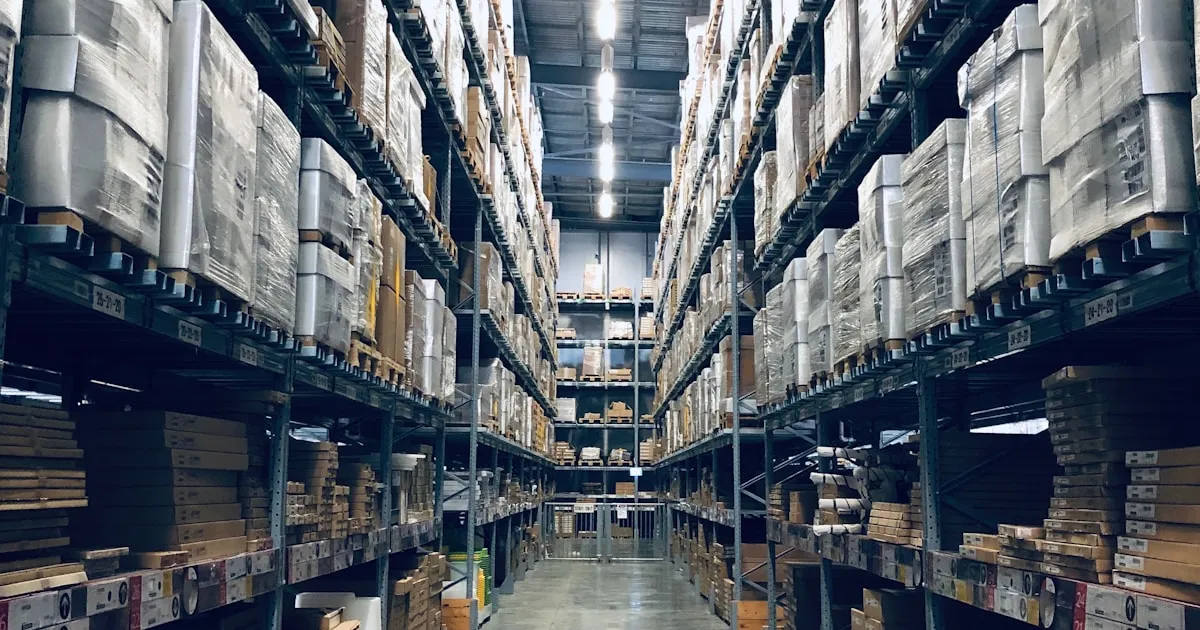
Your warehouse is only as good as the people running it.
Hire too few staff and orders back up. Hire the wrong roles and expensive workers spend their day doing tasks a junior picker could handle. For Indonesian ecommerce sellers scaling past 50 orders per day, getting warehouse staffing right is the difference between same-day dispatch and a backlog that tanks your Shopee seller rating. This guide covers every warehouse staff role, how many people you actually need per order volume, salary benchmarks in IDR, and whether to build your own team or outsource to a 3PL.
What Is Warehouse Staffing?
Warehouse staffing is the process of defining roles, hiring the right number of workers, and structuring a team to handle receiving, storing, picking, packing, and shipping ecommerce orders efficiently. Indonesian warehouses processing 100+ daily orders typically need 3-5 dedicated staff across 4 core roles.
Warehouse staffing means putting the right people in the right positions to move products from shelf to customer. It covers role definition (who does what), team sizing (how many people per order volume), hiring (where to find reliable warehouse workers in Indonesia), and training (how to get a new hire productive within a week).
For ecommerce operations, warehouse staffing is tightly connected to your order management system. The OMS decides what needs to ship. The warehouse staff execute it. When staffing is misaligned — too few pickers during peak hours, no dedicated receiver for incoming stock — the entire fulfillment pipeline breaks down regardless of how good your software is.
According to Indonesia’s Manpower Ministry (Kemnaker) data, warehousing and logistics employment in Indonesia grew 12% year-over-year in 2025, driven largely by ecommerce fulfillment demand. The roles are not hard to fill. Filling them correctly is the challenge.
But knowing you need warehouse staff and knowing exactly which roles to hire are very different problems.
Why Warehouse Staffing Matters for Indonesian Sellers
Indonesian ecommerce sellers who structure their warehouse teams by role — rather than having everyone do everything — reduce picking errors by 25-35% and cut average order processing time from 12 minutes to under 5 minutes per order.
Picture this: you run a 400-SKU health and beauty operation from a rented ruko in Tangerang. Three workers handle everything — receiving supplier deliveries, picking orders, packing boxes, printing labels, handing parcels to JNE and J&T couriers. On a normal day with 80 orders, it works. Barely.
Then Shopee runs a 10.10 sale. Order volume jumps to 250 in a single day. Your three generalists cannot keep up. Receiving gets delayed because everyone is picking. Picking gets sloppy because nobody is dedicated to it. Two wrong items ship. One customer receives a face cream instead of a shampoo. Your shop rating drops from 4.8 to 4.6 in one weekend.
The problem was never headcount. It was role definition.
Indonesian ecommerce warehouses face specific staffing challenges that sellers in other markets do not. The e-Conomy SEA 2024 report by Google, Temasek, and Bain highlights Indonesia as Southeast Asia’s largest ecommerce market, with GMV exceeding USD 60 billion. That scale means warehouse labor competition is real — especially in Jakarta, Surabaya, and Bandung where multiple 3PLs and brand warehouses compete for the same worker pool.
Getting your staffing structure right before you scale is not optional. It is the foundation everything else — WMS, inventory sync, marketplace ratings — depends on.
How Warehouse Staffing Works: The Core Roles
Every ecommerce warehouse needs four core roles: receiver, picker, packer, and warehouse lead. As volume grows past 200 orders per day, add a dedicated inventory controller and returns handler. Each role has distinct skills, responsibilities, and salary bands.
The Four Core Roles
Every ecommerce warehouse — from a 50-order-per-day ruko operation to a 1,000-order facility — needs these four functions covered. In smaller operations, one person may handle two roles. In larger ones, each role has multiple staff.
| Role | Primary Responsibility | Key Skills | IDR Salary Range (Monthly) |
|---|---|---|---|
| Receiver | Inspect and log incoming stock | Counting accuracy, supplier coordination | IDR 3,000,000 - 4,500,000 |
| Picker | Pull correct items from shelves per pick list | Speed, accuracy, WMS/app literacy | IDR 3,000,000 - 4,500,000 |
| Packer | Pack orders correctly, print labels, prepare for courier | Detail orientation, packaging skills | IDR 3,000,000 - 4,500,000 |
| Warehouse Lead | Supervise team, manage SOPs, handle escalations | Leadership, inventory reconciliation, WMS proficiency | IDR 5,000,000 - 8,000,000 |
Receiver
The receiver is the gatekeeper. Every item entering your warehouse passes through this person. They verify supplier deliveries against purchase orders, check for damaged goods, and log incoming stock into your WMS or inventory system. A good receiver catches discrepancies before they become inventory errors.
In practice, the receiver scans or manually enters each SKU and quantity, assigns bin locations (or confirms the WMS-assigned location), and flags any quantity mismatches to the warehouse lead. For warehouses processing 2-3 supplier deliveries per day, this is a part-time function. For operations receiving daily shipments from multiple suppliers, it becomes a full-time role.
Picker
The picker is your speed engine. When an order comes in from Shopee, Tokopedia, or Lazada, the picker reads the pick list — either on a printed sheet, a mobile app, or a handheld scanner — and pulls the correct items from the correct bin locations. Picking accuracy directly determines your fulfillment quality.
Two picking methods dominate Indonesian ecommerce warehouses:
- Single-order picking — the picker grabs items for one order at a time. Simple, accurate, but slow. Best for operations under 50 orders per day.
- Wave picking — the picker collects items for 10-20 orders in a single pass through the warehouse, then sorts them at the packing station. Faster, but requires a WMS to generate efficient wave lists. Best for 100+ orders per day.
Packer
The packer receives picked items, verifies them against the order, wraps or boxes them appropriately, inserts any promotional materials or invoices, and prints the shipping label. Good packers develop a rhythm — verify, wrap, label, stack — that keeps throughput consistent.
In Indonesia, packing requirements vary by marketplace. Shopee orders often require the Shopee-branded thermal label printed directly. Lazada may require additional documentation. The packer needs to know these differences.
Warehouse Lead
The warehouse lead is the on-floor supervisor. They do not pick or pack full-time — they troubleshoot. When a SKU is missing from its bin, the lead investigates. When a new shipment arrives and bin locations need reassigning, the lead decides. When a picker keeps making errors, the lead retrains.
The warehouse lead also handles daily inventory reconciliation, communicating with procurement about incoming stock, and coordinating with the shipping team on courier pickup schedules. In smaller warehouses (under 100 orders per day), the lead may also act as the inventory controller.
Advanced Roles (200+ Orders Per Day)
| Role | When to Add | IDR Salary Range (Monthly) |
|---|---|---|
| Inventory Controller | 300+ SKUs or 200+ daily orders | IDR 5,000,000 - 10,000,000 |
| Returns Handler | Returns exceed 10 per day | IDR 3,500,000 - 5,000,000 |
| Quality Checker | Error rate exceeds 3% | IDR 3,500,000 - 5,000,000 |
The inventory controller runs cycle counts, investigates discrepancies, and maintains accuracy between physical stock and system records. The returns handler processes returned items — inspecting condition, restocking sellable goods, and logging damaged inventory. The quality checker sits between picking and packing, verifying every order before it gets sealed.
Real Examples: Indonesian Warehouse Staffing Models
Three real staffing models from Indonesian ecommerce operations: a 5-person team handling 150 orders per day, a 12-person team at 500 orders per day, and a 3PL hybrid approach for sellers who need multi-city coverage without building their own teams.
Example 1: Small Operation — Tangerang Health & Beauty Seller
- Volume: 100-150 orders per day, 350 SKUs
- Warehouse: 120 sqm rented space
- Team: 5 staff
| Staff Member | Role | Shift |
|---|---|---|
| Person 1 | Receiver + Returns Handler | 08:00-17:00 |
| Person 2 | Picker | 08:00-17:00 |
| Person 3 | Picker + Quality Check | 08:00-17:00 |
| Person 4 | Packer | 08:00-17:00 |
| Person 5 | Warehouse Lead + Inventory Controller | 08:00-17:00 |
Monthly staff cost: approximately IDR 19,000,000 (including BPJS contributions). This team processes same-day dispatch for orders received before 14:00.
Example 2: Mid-Size Operation — Surabaya Electronics Seller
- Volume: 400-500 orders per day, 800 SKUs
- Warehouse: 400 sqm, 3 picking zones
- Team: 12 staff across 2 shifts
| Role | Shift 1 (07:00-15:00) | Shift 2 (13:00-21:00) |
|---|---|---|
| Receiver | 1 | 1 |
| Picker | 2 | 2 |
| Packer | 1 | 1 |
| Quality Checker | 1 | 0 |
| Returns Handler | 1 | 0 |
| Warehouse Lead | 1 | 1 |
Monthly staff cost: approximately IDR 55,000,000. The overlapping shift (13:00-15:00) handles the afternoon order surge when marketplace promotions typically spike.
Example 3: 3PL Hybrid — Jakarta Fashion Brand
A fashion brand selling on Shopee, Lazada, and their own Shopify store uses Shipper for Jakarta fulfillment and maintains a small 3-person in-house team for quality control and new product photography. The 3PL handles receiving, storage, picking, packing, and courier handoff. The in-house team handles product prep, quality standards, and inventory planning.
This model works when order volume exceeds 300 per day but the seller does not want to manage warehouse staff directly. The tradeoff: less control over packing quality and slower response to issues.
How to Get Started with Warehouse Staffing
Start with role definition, not headcount. Map your current order flow, identify bottlenecks, then hire for the specific gap. Most Indonesian ecommerce sellers should begin with 3 staff: one picker, one packer, and one warehouse lead.
Step 1: Map Your Current Workflow
Before hiring anyone, document your current process from order received to parcel handed to courier. Time each step. Where do delays happen? Where do errors occur? If picking takes 8 minutes per order but packing takes 2 minutes, your bottleneck is picking — and that is where you need staff first.
Step 2: Define Roles Based on Volume
Use this sizing guide as a starting point:
| Daily Order Volume | Minimum Staff | Recommended Structure |
|---|---|---|
| 30-50 | 2 | 1 picker-packer + 1 lead (who also receives) |
| 50-100 | 3 | 1 picker + 1 packer + 1 lead/receiver |
| 100-200 | 4-5 | 1 receiver + 2 pickers + 1 packer + 1 lead |
| 200-500 | 8-12 | Dedicated roles + 2 shifts + quality checker |
| 500+ | 15+ or 3PL | Full team + inventory controller + returns handler |
Step 3: Hire From the Right Channels
Indonesian warehouse staff are commonly sourced from:
- Jobstreet Indonesia and Glints — for warehouse lead and inventory controller roles
- Local job boards and WhatsApp groups — for picker and packer roles in industrial areas (Cakung, Cikarang, Tangerang)
- Referrals from existing staff — the most reliable channel for junior roles. Warehouse workers tend to know other reliable workers in the same area.
- 3PL partnerships — if you want staffed fulfillment without direct hiring, companies like Shipper, JNE Fulfillment, and Jet Commerce provide warehouse teams as part of their service.
Step 4: Train Before Deploying
No warehouse hire should touch live orders on day one. Structure a 3-5 day onboarding:
- Day 1: Warehouse layout tour, bin location system, safety protocols
- Day 2: WMS or inventory app training — scanning, picking, confirming (see WMS systems guide for tool options)
- Day 3: Shadow an experienced staff member through a full shift
- Day 4: Supervised solo work with quality checks on every order
- Day 5: Independent work with spot checks
Step 5: Connect Staffing to Your WMS
Warehouse staff without a system are guessing. A warehouse management system generates the pick lists, assigns bin locations, and tracks individual staff performance (picks per hour, error rate). Even a basic setup — Ginee or Sellercraft on a shared tablet — gives your team structured workflows instead of memory-based operations.
Staff performance data from your WMS also tells you when to hire. If picks per hour per person drops below 15 consistently, your team is overloaded and you need another picker.
In-House vs 3PL Staffing: Which Model Fits?
In-house warehouse staff gives you control over quality and speed. 3PL staffing gives you scalability without HR overhead. The breakeven point for most Indonesian ecommerce sellers is 300-500 orders per day.
| Factor | In-House Staff | 3PL Staffing |
|---|---|---|
| Control over quality | Full — you set SOPs and train directly | Limited — you rely on 3PL standards |
| Scalability | Slow — hiring takes 2-4 weeks | Fast — 3PL adds capacity on demand |
| Cost at 100 orders/day | Lower (IDR 15-20M/month for 3-4 staff) | Higher (3PL fees per order add up) |
| Cost at 500 orders/day | Higher (12+ staff, space, equipment) | Often lower (economies of scale) |
| Multi-city coverage | Expensive — separate warehouse per city | Built-in — 3PLs have nationwide networks |
| HR overhead | Full (BPJS, payroll, leave, hiring) | None — 3PL manages their staff |
For sellers in the 50-300 orders per day range, in-house staffing typically wins on cost and quality. Above 500 orders per day or when you need fulfillment from multiple cities (Jakarta + Surabaya + Medan), a 3PL or hybrid model makes more financial sense.
Common Staffing Mistakes to Avoid
The three most expensive warehouse staffing mistakes: hiring generalists instead of specialists, skipping WMS training, and not planning for volume spikes during campaign periods like 11.11 and 12.12.
Hiring everyone as “warehouse staff” without role clarity. When everyone does everything, nobody is accountable for picking accuracy or receiving quality. Define roles from day one, even if one person covers two roles. The role definition matters more than the headcount.
Skipping WMS or inventory app training. A warehouse worker who cannot use the scanning app or read a digital pick list will fall back to memory-based picking. That works at 30 orders per day. At 100+, it creates errors that cost you returns and bad reviews. Invest 2-3 days in training before go-live.
Not planning for campaign spikes. Indonesia’s ecommerce calendar has predictable surges: Ramadan, 9.9, 10.10, 11.11, 12.12, and payday periods. If your normal team handles 100 orders per day, 11.11 might push you to 300-400. Plan temporary staff or negotiate surge capacity with your 3PL or fulfillment partner 4-6 weeks before each campaign.
Ignoring BPJS and labor compliance. All warehouse staff in Indonesia must be enrolled in BPJS Ketenagakerjaan (employment) and BPJS Kesehatan (health). Non-compliance risks fines and legal issues. Factor IDR 300,000-500,000 per staff per month for BPJS contributions into your staffing budget.
Next Steps
A week from now, your warehouse could still be running on memory and goodwill — or you could have defined roles, structured shifts, and a training plan that turns new hires into productive team members within five days.
Start by mapping your current workflow and identifying your biggest bottleneck. If picking is the problem, hire a dedicated picker. If receiving delays cause downstream chaos, add a receiver. Match each hire to a specific gap, not a generic “warehouse helper” role.
For the systems side, read our WMS guide to understand which tools generate the pick lists and bin assignments your staff will work from. If you are operating in the Jakarta area, our DWP Jakarta warehouse guide covers location-specific logistics considerations. And if your inventory management needs extend beyond the warehouse floor, explore the inventory management hub for stock sync and multi-channel control.