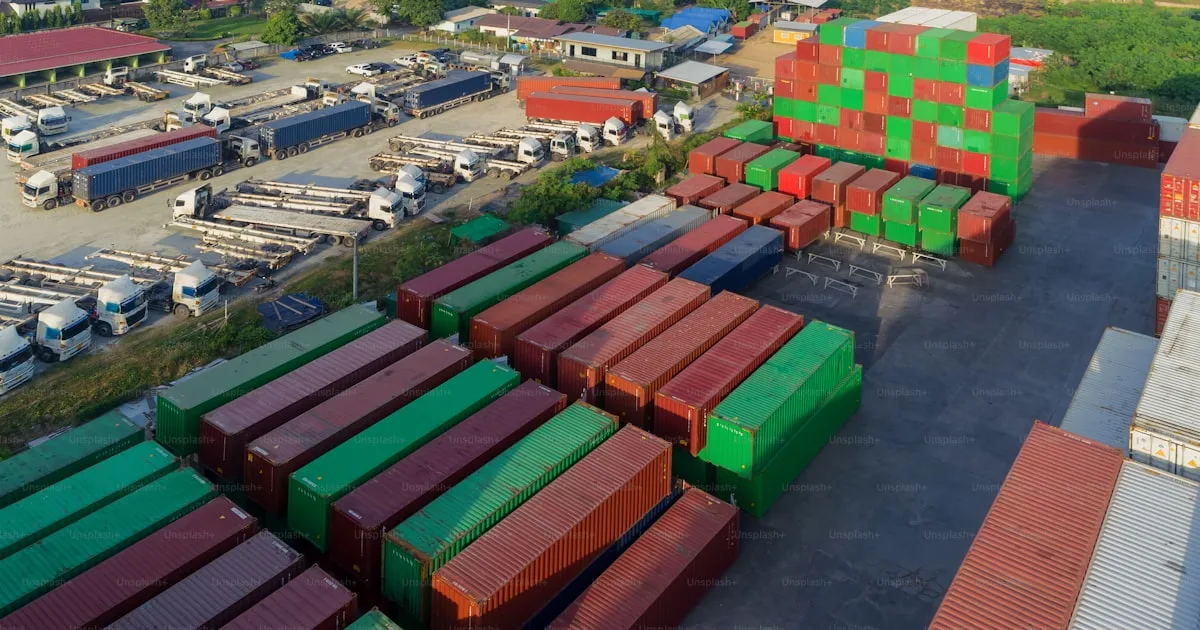
Singapore is 730 square kilometres. Every delivery is local.
That geographic advantage makes Singapore one of the easiest markets in Southeast Asia for ecommerce fulfillment — same-day delivery is standard, courier networks reach every corner of the island, and there are no provincial shipping delays to worry about. But the same factor that makes delivery easy makes warehouse space expensive. Renting your own storage in Singapore costs more per square metre than almost anywhere in the region. That is why 3PL — third-party logistics — is a particularly attractive option for Singapore-based ecommerce sellers. This guide covers how 3PL works in Singapore, which providers serve this market, what it costs in SGD, and how to decide between self-fulfillment and outsourcing.
What Is 3PL Logistics?
3PL (third-party logistics) is a service where an external company handles your warehousing, order fulfillment, and shipping. You send your inventory to the 3PL’s warehouse, connect your marketplace stores to their system, and they pick, pack, and ship orders on your behalf. You pay per order fulfilled and per unit stored, rather than maintaining your own warehouse space, staff, and courier relationships.
For Singapore ecommerce sellers, 3PL solves a specific economic problem: warehouse rent in Singapore is among the highest in Southeast Asia. According to JTC Corporation, Singapore’s industrial property manager, warehouse rental rates in industrial areas range from SGD 1.50-2.50 per square foot per month. A modest 500 square foot storage space costs SGD 750-1,250 monthly before utilities, staffing, and equipment. A 3PL spreads that infrastructure cost across many sellers, reducing the per-order cost of warehousing significantly.
But 3PL is not purely about cost savings. For sellers who want to scale without hiring warehouse staff and managing courier pickups, outsourcing fulfillment frees time to focus on product sourcing, marketing, and business growth.
The trade-off is control — and whether that trade-off makes sense depends on your business profile.
Why Singapore’s Market Favours 3PL
Imagine you sell home and kitchen accessories on Shopee SG and Lazada SG from your HDB flat. Business has grown steadily — you process 25-35 orders per day. Your spare bedroom is now a stockroom. Boxes line the corridor. Your partner is not happy. You need to move inventory out of your home, but renting even a small commercial space in Singapore means SGD 1,000+ per month before you have packed a single order.
This is where Singapore’s 3PL ecosystem fills a gap that exists differently here than in other Southeast Asian markets. In Indonesia or the Philippines, warehouse space is relatively cheap and sellers scale their own operations gradually. In Singapore, the jump from home-based to warehouse-based is expensive. A 3PL lets you scale fulfillment without that capital leap.
Singapore’s delivery expectations also favour 3PL. Consumers here expect next-day delivery as standard. Shopee SG and Lazada SG promote same-day and next-day options prominently. If you self-fulfill from your HDB and miss the courier pickup window, your package ships a day late. A 3PL facility runs structured pickup schedules with couriers, ensuring packages ship on time every day. According to the Infocomm Media Development Authority (IMDA), Singapore’s digital economy infrastructure supports rapid logistics, and consumer expectations have aligned accordingly.
Singapore also serves as a natural hub for cross-border ecommerce into Malaysia and Indonesia. A 3PL with cross-border capability can ship from Singapore to Johor in hours or to Jakarta in 2-3 days. For sellers targeting customers across the Causeway or across the Strait, Singapore-based 3PLs with regional networks are a strategic advantage.
3PL Providers in Singapore
The Singapore 3PL market for ecommerce includes marketplace-native fulfillment programs, regional 3PL platforms, and cross-border specialists. Here is what is available, based on official documentation and provider information.
Marketplace-Native Fulfillment
Fulfilled by Shopee (FBS) — Singapore: Shopee stores and ships your products from their Singapore facility. You get the “Preferred” badge on listings, priority placement during campaigns, and Shopee-negotiated shipping rates. FBS inventory serves Shopee SG orders only.
Fulfilled by Lazada (FBL) — Singapore: Similar program — Lazada warehouses your products and handles fulfillment. You receive the FBL badge and access to faster delivery tiers. FBL inventory serves Lazada SG orders only.
Both programs work well for single-channel sellers. The key limitation: if you sell on both Shopee SG and Lazada SG, using FBS and FBL means maintaining two separate inventory pools. Your 100 units of Product X become 60 in FBS and 40 in FBL, with no inventory transfer between them. This split inventory model increases your risk of stockouts on one platform while having excess stock on the other.
Independent 3PL Providers
| Provider | Domestic SG | Cross-Border | Marketplace Integration | Starting Price |
|---|---|---|---|---|
| Locad | Yes | MY, ID, PH, TH | Shopee, Lazada, TikTok Shop, Shopify | Usage-based, no minimum |
| Ninja Van Fulfillment | Yes | MY, ID | Shopee, Lazada | Usage-based |
| Janio Asia | Yes | MY, ID, TH, PH, VN | Shopify, WooCommerce, API | Usage-based |
| DHL eCommerce | Yes | Global | API integration | Volume-based |
| Qxpress | Yes | MY, ID, TH | Shopee (legacy partner) | Volume-based |
Locad is the most commonly cited independent 3PL for Southeast Asian ecommerce sellers. Locad operates fulfillment centres across Singapore, Malaysia, Indonesia, the Philippines, and Thailand. For Singapore sellers, Locad’s key advantage is multi-channel fulfillment from a single inventory pool — one stock of Product X serves orders from Shopee SG, Lazada SG, and your Shopify store simultaneously. Pricing is usage-based with no long-term contracts, making it accessible for mid-size sellers.
Ninja Van Fulfillment extends Ninja Van’s last-mile delivery strength into warehousing and fulfillment. The advantage: tight integration between warehouse operations and Ninja Van’s own courier network means faster handoff from packing to delivery. For sellers who already ship heavily with Ninja Van, the fulfillment service is a natural extension.
Janio Asia specialises in cross-border logistics from Singapore. If your primary need is shipping products to customers in Malaysia, Indonesia, Thailand, or other Southeast Asian markets, Janio handles customs clearance, duties calculation, and last-mile delivery through local courier partners in each destination country. Janio is less focused on domestic Singapore fulfillment and more suited for sellers whose customer base extends beyond the island.
What 3PL Costs in Singapore
Singapore 3PL pricing has three components: storage, pick-and-pack, and shipping. Here is a realistic cost breakdown based on available provider information and market rates.
Storage Fees
3PL storage in Singapore typically runs SGD 1-3 per unit per month for standard-sized products (items that fit in a shoebox-sized bin). Bulky or oversized items cost more. Most 3PLs calculate storage by cubic metre or by pallet position rather than per unit for larger inventory volumes.
Example: 500 units of phone accessories at SGD 1.50 per unit per month = SGD 750 per month for storage. Compare this to renting your own 200 square foot storage space at SGD 400-600 per month — the 3PL costs more per unit, but you get shelving, climate control, and staffing included.
Pick and Pack Fees
SGD 2-5 per order for standard pick and pack (1-3 items per order). Multi-item orders may incur an additional SGD 0.50-1.00 per item beyond the first. Packaging materials (polymailer or box, bubble wrap, tape) are typically included in the pick-and-pack fee.
Shipping Fees
Domestic Singapore shipping through a 3PL typically costs SGD 2.50-5.00 per package for standard sizes, depending on the courier and service level. 3PLs negotiate bulk rates with couriers, which are usually better than the rates available to individual sellers. Cross-border shipping to Malaysia starts at approximately SGD 5-8 per package; to Indonesia, SGD 8-15 per package.
Total Per-Order Cost
For a typical Singapore domestic order (1 item, standard size):
- Storage: ~SGD 0.05 per day per unit (SGD 1.50/month amortised)
- Pick and pack: SGD 3.00
- Domestic shipping: SGD 3.50
- Total: approximately SGD 6.50-7.00 per order
For cross-border to Malaysia:
- Storage + pick and pack: SGD 3.05
- Cross-border shipping: SGD 6.00-8.00
- Total: approximately SGD 9.00-11.00 per order
These numbers vary by provider, volume, and product dimensions. Request itemised quotes from at least two providers with your actual product details and order volume before deciding.
Self-Fulfillment vs. 3PL: The Singapore Decision
The decision framework for Singapore sellers differs from other Southeast Asian markets because of the high cost of space.
Self-Fulfillment Works When:
- You process fewer than 20-30 orders per day
- You have available space (HDB spare room, storage unit) that does not cost extra rent
- Your products require special handling (custom packaging, quality inspection, gift wrapping)
- You are still testing products and your SKU mix changes frequently
- You want maximum control over the unboxing experience
Typical self-fulfillment costs (Singapore):
- Storage: SGD 0 (using existing home space) to SGD 400-600/month for a small storage unit
- Packing materials: SGD 1-3 per order
- Shipping: SGD 3-5 per domestic order (standard courier rates)
- Your time: the opportunity cost of 2-4 hours per day spent on fulfillment
3PL Makes Sense When:
- You process 30+ orders per day consistently
- Your home storage is maxed out and renting warehouse space is prohibitively expensive
- You sell on multiple channels and need centralized inventory
- You want to spend time on business growth (sourcing, marketing) rather than packing
- You plan to expand cross-border to Malaysia or Indonesia
The crossover point: For most Singapore sellers, 3PL becomes cost-effective when self-fulfillment requires renting additional space. If you would otherwise pay SGD 1,000+/month for a commercial storage unit plus 3-4 hours daily of your time packing, a 3PL at SGD 6-7 per order x 900 orders per month (SGD 5,400-6,300) may be comparable — and you get your time back.
The math shifts further in favour of 3PL when you factor in opportunity cost. Those 3-4 daily hours spent packing could go toward sourcing new products, optimising listings, or running marketing campaigns that grow revenue.
Cross-Border Fulfillment from Singapore
One of Singapore’s unique advantages as an ecommerce base is its proximity and connectivity to Malaysia and Indonesia — two much larger consumer markets.
Shipping to Malaysia
Singapore to Peninsular Malaysia is the easiest cross-border route in Southeast Asia. Multiple couriers offer next-day delivery from Singapore to Johor Bahru, Kuala Lumpur, and Penang. Ninja Van, Janio Asia, and DHL eCommerce all provide established Singapore-to-Malaysia services. Shipping cost: SGD 5-8 per standard package. Customs clearance is generally straightforward for ecommerce shipments under MYR 500 in declared value.
Shipping to Indonesia
Singapore to Jakarta takes 2-4 days via cross-border couriers. Customs requirements are more complex than Malaysia — Indonesian customs levies import duties on shipments above a low threshold value. Janio Asia specialises in managing Indonesian customs clearance for Singapore-based sellers. Shipping cost: SGD 8-15 per package depending on weight and declared value.
Strategic Positioning
For sellers targeting the broader Southeast Asian market, one approach is to use Singapore as a regional hub: store inventory in Singapore, fulfill domestic orders directly, and ship cross-border to Malaysia and Indonesia using cross-border 3PLs. An alternative approach — and one that becomes more attractive at higher volumes — is to store inventory in the destination country itself (e.g., a Locad warehouse in Jakarta for Indonesian customers), eliminating cross-border shipping costs and customs complexity. The right approach depends on your volume per destination market.
Common Mistakes to Avoid
Using FBS and FBL simultaneously for the same products. Splitting your inventory between Shopee and Lazada’s fulfillment programs means you need to forecast demand per platform accurately. Most sellers overstock one and understock the other. If you sell on both channels, use an independent 3PL with a single inventory pool instead.
Choosing a 3PL based on price alone. The cheapest per-order rate means nothing if the 3PL has slow sync with your marketplace accounts, poor packing quality, or delayed shipping handoff. Request references from current clients in your product category. Visit the facility if possible. For guidance on managing inventory across your fulfillment channels, see our ecommerce inventory management guide.
Ignoring the onboarding timeline. Switching to a 3PL is not instant. Expect 2-4 weeks for account setup, product cataloguing, inventory transfer, and testing. Plan the transition during a low-volume period — not the week before 11.11 or 12.12 campaigns.
Not testing cross-border shipping before scaling. If cross-border to Malaysia or Indonesia is part of your plan, send test shipments before committing volume. Check delivery times, customs clearance reliability, and whether the packaging arrives intact. Cross-border shipping adds variables that domestic fulfillment does not have.
Next Steps
You could keep packing orders from your spare bedroom, watching your living space shrink as inventory grows. Or you could move your stock to a 3PL facility, get your home back, and spend the freed-up hours growing your business. The right moment to switch is when the math and the frustration both point in the same direction.
Start by requesting quotes from two providers: Locad (for multi-channel domestic and cross-border) and Ninja Van Fulfillment (for domestic with strong last-mile integration). Compare their total per-order cost against what you currently spend in time and materials. For more fulfillment strategies specific to Singapore, return to our Singapore fulfillment and 3PL hub. For a step-by-step look at the physical fulfillment process itself, see our guide to the pick and pack process. For sellers looking at the order management side of their operation, our order management system guide covers the systems that coordinate orders across channels before they reach your 3PL.