
Your Shopee SG stock just went negative.
Three marketplace channels, one physical warehouse, and pick decisions living inside staff memory — discrepancies are not a question of if but when. A WMS — warehouse management system — replaces memory with structure. This guide explains what a WMS does, how it works inside a Singapore ecommerce warehouse, which features matter for multi-channel sellers, and which tools are available in the SG market.
What Is a WMS (Warehouse Management System)?
A WMS (warehouse management system) is software that manages the physical movement of goods inside a warehouse. It assigns products to specific bin locations, generates pick lists for orders, tracks stock movement between locations, and runs cycle counts to verify accuracy. Singapore sellers using structured WMS workflows report measurable reductions in picking errors and fulfillment cycle time compared to manual warehouse systems.
A WMS answers three questions your team cannot reliably answer from memory: Where exactly is this product? Which items need to ship now, and in what sequence? Does the physical stock count match the digital count?
The WMS handles the physical side of operations — everything that happens inside your warehouse walls. An order management system handles the commercial side — receiving marketplace orders, generating shipping labels, and syncing tracking numbers back to Shopee SG, Lazada SG, and TikTok Shop. The two systems complement each other: the OMS knows what needs to ship; the WMS knows where to find it and how to pick it efficiently.
At its core, a WMS assigns every product a named storage location (a bin, shelf, or zone), generates pick lists that direct warehouse staff to exact locations, logs every stock movement, and runs scheduled cycle counts to catch discrepancies before they become overselling errors.
Singapore’s ecommerce market is smaller in volume than Indonesia’s, but it operates under tighter delivery expectations — with customers accustomed to same-day or next-day fulfillment. According to Google, Temasek, and Bain’s e-Conomy SEA 2024 report, Southeast Asia’s ecommerce sector reached over USD 159 billion in GMV in 2023, with Singapore among the region’s most operationally sophisticated markets. In that environment, warehouse errors are expensive — wrong shipments damage Shopee SG seller ratings, trigger Lazada SG penalty points, and generate costly returns.
How Does a WMS Work Inside a Singapore Ecommerce Warehouse?
A WMS operates through five core functions: bin location assignment, pick list generation and wave picking, receiving and put-away workflows, stock movement tracking, and cycle counting. For Singapore sellers processing 80 or more daily orders across Shopee SG, Lazada SG, and TikTok Shop, these functions eliminate reliance on staff memory and reduce fulfillment errors.
WMS platforms vary significantly at different price points, but they share the same operational logic. Here are the five functions that matter for Singapore ecommerce warehouse operations.
Is Bin Location Management the Foundation of a WMS?
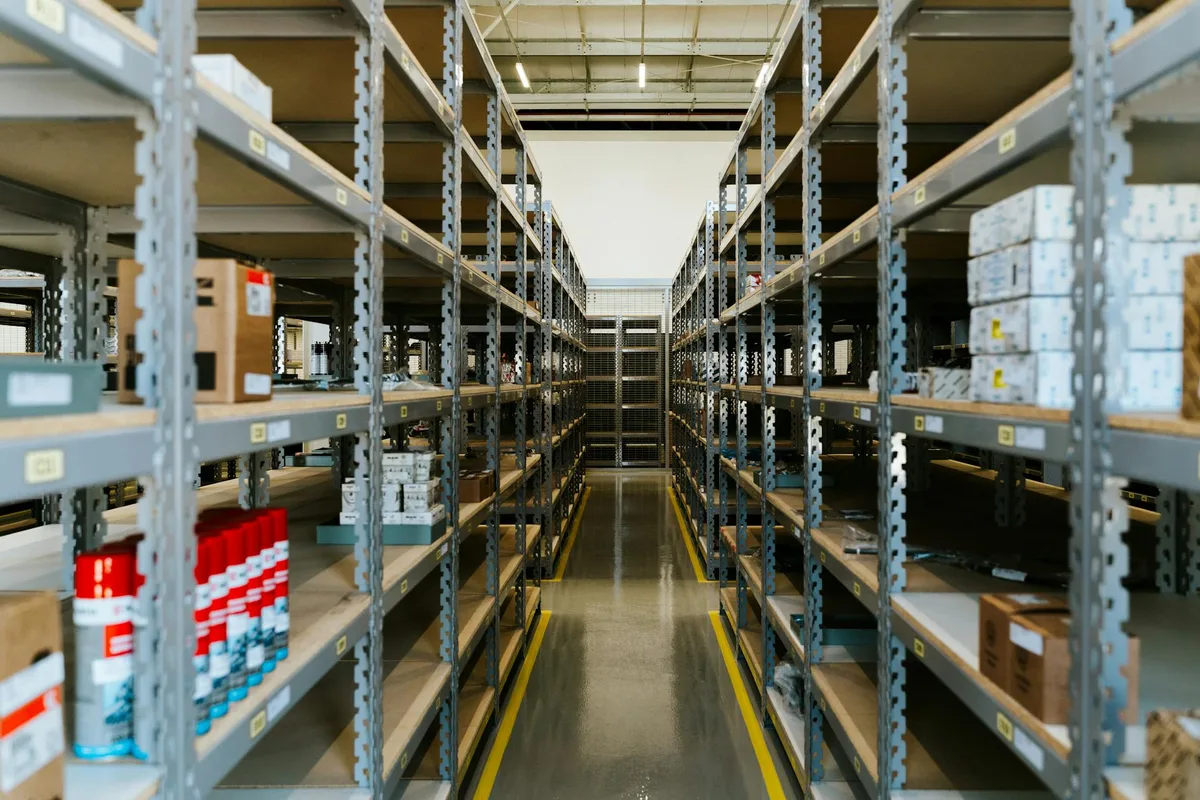
Yes. Every storage position in your warehouse gets a unique code — Aisle, Rack, Shelf, Bin. A product does not exist “somewhere near the back.” It exists at A2-R3-S2-B04. When the WMS generates a pick list, it routes the picker directly to that code. When new stock arrives, the system assigns an open bin based on available space and sales velocity.
For Singapore sellers operating small-to-medium warehouses in areas like Pandan Loop, Toa Payoh Industrial Estate, or Jurong West, organized bin management converts dense storage into navigable inventory. A 200 square metre space with 400 SKUs becomes a structured system rather than a memory exercise.
How Does Wave Picking Save Time for Singapore Sellers?
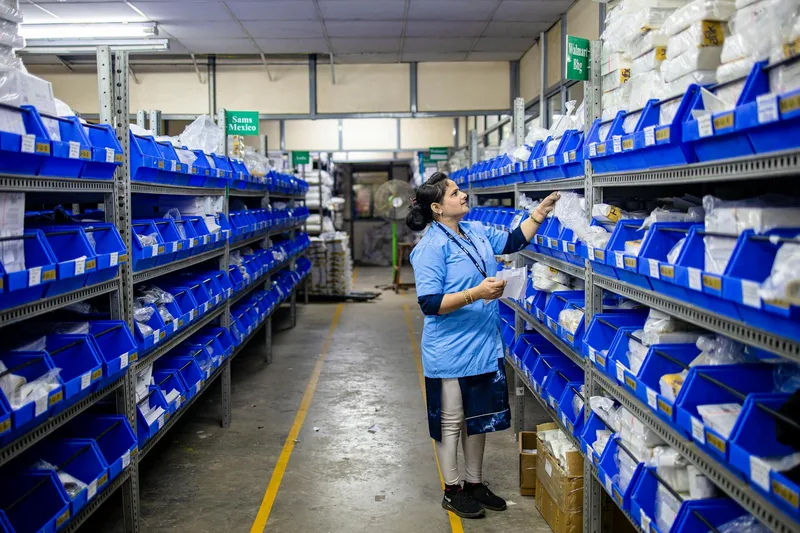
A basic pick list directs your staff to collect items for one order. Wave picking groups multiple orders into a single warehouse run — a picker collects items for five orders in one trip instead of five separate trips to the same bin.
According to Element Logic’s WMS analysis for the Singapore market, optimized pick routing can reduce warehouse travel time by 30-40% for high-volume operations. For a Singapore warehouse processing 120 orders daily, that reduction translates directly into faster dispatch before SingPost, Ninja Van, or J&T SG collection cutoffs.
How Does a WMS Handle Receiving and Stock Movement?
When inventory arrives from suppliers, the WMS guides the receiving process: scan the incoming shipment against the purchase order, verify quantities, and assign each product to a storage bin. Advanced systems suggest put-away locations based on sales velocity — fast-moving SKUs go near the packing station; slow movers go to higher shelves or rear zones.
Every subsequent movement — from bin to packing station, from packing to returns shelf — gets logged. This audit trail answers questions like: When did this batch arrive? Who moved it? When was it picked for order #38471? For Singapore sellers dealing with discrepancies between marketplace stock counts and physical counts, movement tracking pinpoints exactly where losses occur.
What Is Cycle Counting in a WMS?
Cycle counting replaces the annual full warehouse stocktake with continuous rolling counts. The WMS assigns daily tasks: count bins A-01 through A-10 on Monday, B-01 through B-10 on Tuesday. Over a month, every bin gets verified without a single day of warehouse downtime.
Most WMS platforms let you set count frequency by product value or movement speed. High-value or fast-moving SKUs get counted weekly; slow movers monthly. Discrepancies surface immediately, before they cascade into overselling errors across Shopee SG or Lazada SG channels.
Which WMS Tools Are Available for Singapore Ecommerce Sellers?
Singapore ecommerce sellers can access 5 main WMS-capable platforms: Anchanto (full enterprise WMS, Singapore HQ), HashMicro (Singapore-based ERP with WMS module), Ginee (multi-channel inventory with basic warehouse features), SiteGiant WMS (Singapore marketplace-focused), and NetSuite SG (enterprise ERP). Pricing runs from SGD 45/month for entry-level tools to SGD 1,000+ per month for enterprise platforms, based on confirmed documentation and seller community feedback.
The WMS market for Singapore marketplace sellers differs from the enterprise logistics market. Most mid-size sellers use tools that combine order management, inventory tracking, and basic warehouse features in one platform. Here are the platforms with confirmed Singapore availability and ecommerce marketplace integrations, based on official product documentation and seller community feedback.
| Tool | WMS Features | Marketplace Sync (SG) | Starting Price (SGD) | Best For |
|---|---|---|---|---|
| Ginee | Basic bin management, stock sync, pick lists | Shopee SG, Lazada SG, TikTok Shop, Shopify | ~SGD 45–80/mo | Small-to-mid sellers needing combined OMS + basic warehouse |
| SiteGiant WMS | Warehouse management, pick and pack, stock control | Shopee SG, Lazada SG, TikTok Shop SG | Contact for pricing | Singapore marketplace sellers, SME scale |
| Anchanto | Full enterprise WMS, zone management, wave picking, receiving | Shopee SG, Lazada SG, TikTok Shop, Zalora | Custom (SGD 1,000+/mo est.) | Enterprise, 500+ SKUs, multi-warehouse, regional operations |
| HashMicro | ERP with WMS module, multi-warehouse, bin management | Custom API integrations | Custom (SGD 500–2,000+/mo est.) | Singapore SMEs needing ERP + warehouse management |
| NetSuite SG | Full ERP with WMS module, advanced automation | Custom API integrations | Custom (SGD 1,500+/mo est.) | Large enterprises with complex supply chains |
A few notes on this landscape. Ginee is primarily an OMS and inventory tool with basic warehouse features added — it suits sellers needing organized stock tracking and pick lists but not full bin management. SiteGiant WMS is built for Singapore’s marketplace seller ecosystem, with Shopee SG and Lazada SG integrations without enterprise overhead. Anchanto is the only platform here built for complex multi-warehouse operations from the ground up, with a Singapore headquarters for local support.
For context on how WMS integrates with order management for Singapore sellers, see our ecommerce order management system guide.
Unsure which WMS tier fits your Singapore warehouse? Our order management system comparison for Singapore breaks down how OMS and WMS functions overlap at each order volume tier — so you can see exactly which integration stack fits Shopee SG and Lazada SG sellers at your scale.
Do You Actually Need a WMS for Your Singapore Ecommerce Business?
Singapore ecommerce sellers with fewer than 100 SKUs and under 30 daily orders do not need a WMS — basic inventory tools suffice. Sellers with 300+ SKUs, 2 or more warehouse staff, and 80+ daily orders need one. The 100-300 SKU range is the decision zone: repeated picking errors and stock discrepancies are the signal to upgrade.
Not every Singapore marketplace seller needs a warehouse management system. Over-engineering a small operation creates overhead without benefit. Under-engineering a growing one causes errors that damage seller ratings and trigger customer complaints.
You do NOT need a WMS if:
- You store fewer than 100 SKUs in a single room or shared warehouse bay
- You (or one person) handle all picking and packing personally
- You process fewer than 30 orders per day across all channels
- You know where every product is stored without a system
At this scale, Ginee’s built-in inventory features or a spreadsheet with labeled shelving is sufficient.
You NEED a WMS if:
- You store 300+ SKUs across multiple shelves, racks, or zones
- You employ 2 or more warehouse staff who pick and pack independently
- You process 80+ orders per day across Shopee SG, Lazada SG, or TikTok Shop
- You experience picking errors more than once a week
- Stock discrepancies between your system and marketplace inventory recur regularly
- You operate multiple warehouse locations in Singapore or across the region
At this scale, human memory fails. A WMS converts warehouse operations from something staff remember into something the system manages.
The in-between zone — 100-300 SKUs, 30-80 orders per day — is where most Singapore multi-channel sellers sit. Consider a WMS when symptoms appear: wrong items shipped repeatedly, stock counts that disagree with marketplace figures, or new staff who take weeks to learn product locations. If those symptoms have not appeared, start with organized shelving and labeled bins.
Enterprise Singapore’s Productivity Solutions Grant (PSG) provides co-funding support for Singapore SMEs adopting qualifying inventory and warehouse management tools — worth reviewing eligibility before committing to a paid platform. For background on managing multi-channel stock before reaching WMS scale, see our inventory management guide for Singapore sellers.

Frequently Asked Questions
What is a WMS in ecommerce?
A WMS (warehouse management system) is software that controls physical warehouse operations: where products are stored, how they are picked for orders, and how stock moves between locations. For Singapore ecommerce sellers, a WMS integrates with Shopee SG, Lazada SG, and TikTok Shop to keep digital inventory counts aligned with physical warehouse stock at all times.
What is the difference between a WMS and an OMS?
An OMS (order management system) handles the commercial order lifecycle — receiving marketplace orders, generating shipping labels, and syncing tracking numbers back to each platform. A WMS handles the physical side inside the warehouse: bin location assignment, pick list generation, stock movement tracking, and cycle counts. Many mid-market tools like Ginee and Anchanto combine basic functions of both, but dedicated WMS platforms provide deeper warehouse control for high-volume Singapore operations.
Which WMS tools are available in Singapore?
Singapore ecommerce sellers can access Anchanto (Singapore HQ, full enterprise WMS), HashMicro (Singapore-based ERP with WMS module), Ginee (multi-channel inventory with basic warehouse features), SiteGiant WMS (Singapore marketplace-focused with Shopee SG and Lazada SG integration), and NetSuite SG (enterprise ERP with WMS module). Pricing ranges from around SGD 45/month for entry-level tools to SGD 1,000+ per month for enterprise platforms, based on official documentation and seller community feedback.
Do I need a WMS for a small Singapore ecommerce warehouse?
If you store fewer than 100 SKUs and process under 30 orders daily, a WMS is unnecessary — Ginee’s inventory features or a well-organized spreadsheet will serve you better. A WMS becomes valuable when you exceed 300 SKUs, employ 2 or more warehouse staff, or experience repeated picking errors and stock discrepancies across your Shopee SG and Lazada SG channels.
How much does WMS software cost in Singapore?
WMS software for Singapore sellers typically ranges from SGD 45-80 per month for basic inventory and warehouse tools like Ginee to SGD 300-800 per month for mid-tier platforms with genuine warehouse modules. Enterprise solutions like Anchanto and HashMicro are priced on custom contracts, typically starting at SGD 1,000+ per month depending on order volume, warehouse size, and integration requirements.
Keep Reading
- Ecommerce Order Management Systems for Singapore — how OMS platforms integrate with WMS for end-to-end order fulfillment on Shopee SG and Lazada SG
- Ecommerce 3PL and Fulfillment in Singapore — when to outsource warehousing to a Singapore third-party logistics provider
- Inventory Management for Singapore Sellers — multi-channel stock sync and tracking across Shopee SG, Lazada SG, and TikTok Shop